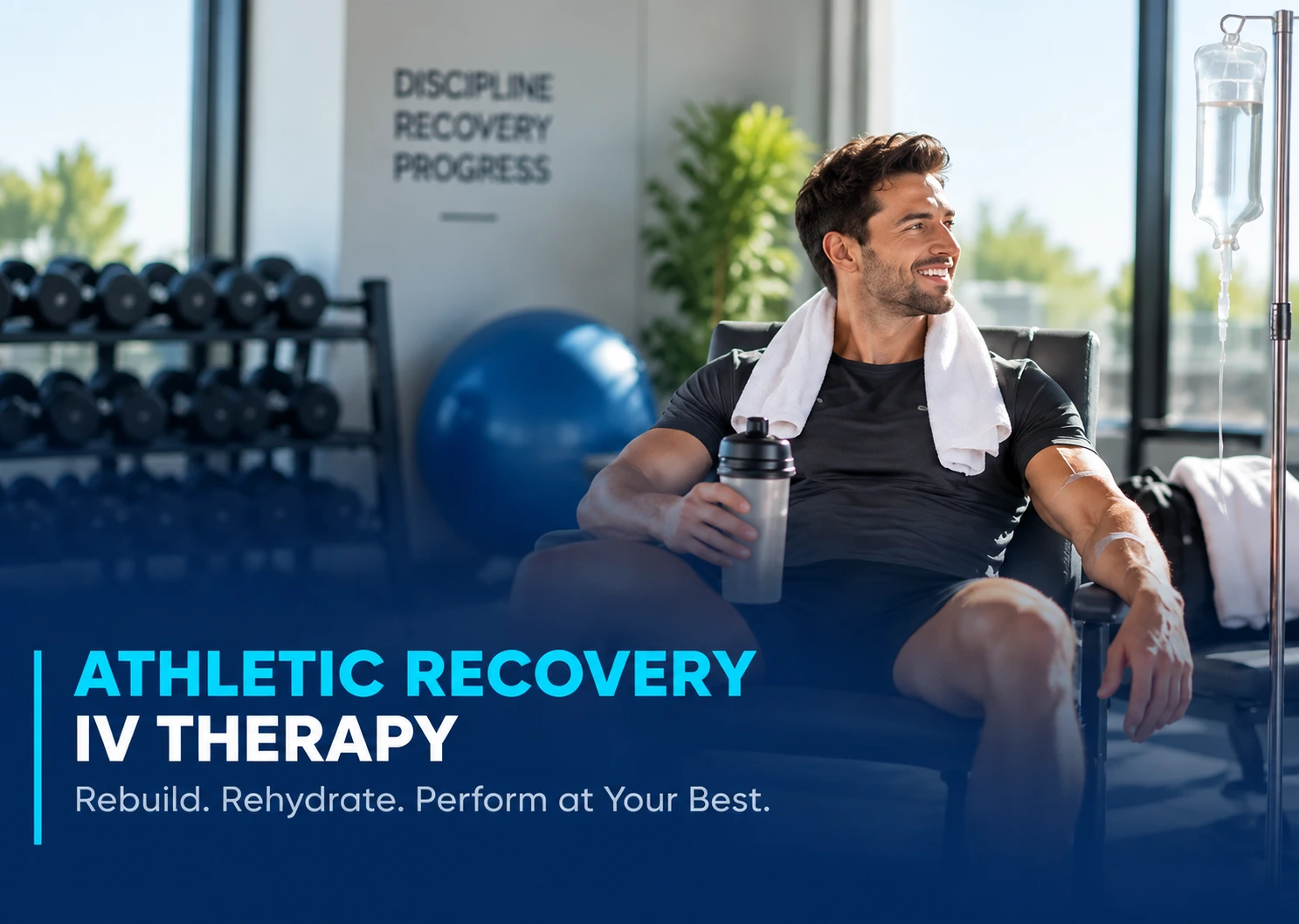
Athletic recovery IV therapy provides fluids and, depending on the IV formula, electrolytes or specific nutrients via a vein to aid hydration post-strenuous exercise. It is a favourite choice among sportspeople who are focused on endurance and among anyone who gets cramped and twisted after a workout.
It’s not a quick path. If you are truly dehydrated, water replacement will help. It won’t heal muscle tissue and no infusion will take the place of sleep, food and careful programming.
We will cover how it works, when hydration by IV actually makes sense, what goes in the bag, the difference between recovery and performance claims, safety including one competition rule worth knowing and what a session involves.
What Is Athletic Recovery IV Therapy?
Sports IV therapy is a wellness infusion that’s based on a bag of sterile saline or lactated Ringer’s fluid (sometimes with vitamins added). One session lasts approximately 40-60 minutes. At Infinite Dripz, vitamin IV drips Dallas services are designed to support hydration and wellness goals with customized formulations based on your needs.
How an Athlete’s IV Session Works
A small tube is inserted into your arm and allows the fluid to be administered directly into your bloodstream without going through the digestive tract. That’s why an IV for athletes is appealing: after a long time of exertion, you have an upset stomach and it is not pleasant to drink large amounts of fluid and it is not absorbed quickly.
A session is straightforward. A nurse records your medical background and prescription, takes your vital signs, installs the catheter, administers the infusion at a slow rate, monitors you while the infusion is in place and removes the catheter. No rest day and workouts may be continued the next day.
Before scheduling treatment, many patients want to understand timing and expectations. Our guide explains how long do IV fluids take and what factors may affect infusion duration.
What Makes a Sports Recovery IV Different?
Formulations lean toward what heavy sweating depletes. It starts with sodium and chloride and frequently is supplemented with magnesium for muscle function and the B vitamins for energy metabolism. A few clinics add the amino acids or vitamin C.
A muscle recovery drip is really a hydration and electrolyte drip with recovery branding attached. The ingredients support normal function rather than accelerating tissue repair, so treat a muscle recovery IV as fluid replacement with extras rather than a repair treatment.
Who May Consider It?
- For endurance athletes after running a marathon, a long ride or a triathlon.
- Anyone training in heat with high sweat losses
- Athletes who cannot rehydrate normally because of post exercise nausea
- People competing on consecutive days with limited recovery time
Most recreational exercisers do not need this. If you finished a gym session and can drink water comfortably, water is the answer.
IV Hydration for Athletes: When Is It Useful?
IV hydration for athletes is not a standard practice and is only used in specific scenarios.
Think of it when you’ve been sweating, when you’ve lost so much weight that you look lighter than you did before exercising; when you are training outdoors on hot days and aren’t able to exercise for many consecutive days; when you are doing a lot of endurance training and you are becoming lighter and lighter each day; when you have stomach upset during an intense workout and can’t drink.
That last one is the strongest case. Sports IV hydration solves a problem oral fluids genuinely cannot when your gut has shut down. For athletes dealing with significant fluid loss after intense exercise, a hydration drip Dallas option can provide fluids and electrolytes when oral hydration is difficult.
When IV Hydration Is Not Necessary
Most of the time. Research consistently finds that for athletes who can drink, oral rehydration with fluid and sodium restores hydration status as effectively as IV fluids and often just as quickly.
If you can keep fluids down and your losses are moderate, water with electrolytes and a proper meal does the job for a fraction of the cost. IV drips for athletes are worth paying for when oral intake is failing, not when it is merely inconvenient.
IV for Sports Recovery: What Can It Help With?
Recovery is several processes happening at once and an IV for sports recovery only touches one of them. Athletic recovery IV therapy addresses fluid status, which is worth understanding before you decide what to spend on it.
What Fluids Actually Address
Rehydration will restore blood volume and help with circulation, thermoregulation and how you feel. Correcting fluid loss relieves headache, dizziness, fatigue and cramping when those are dehydration driven.
What fluids do not do is rebuild muscle. Protein and time are both required to build muscle protein. Carbohydrates are required for replenishing glycogen. Neither comes on a hydration bag and neither is an extra if you’re looking to recover.
Soreness vs Something That Needs a Doctor
Routine delayed onset muscle soreness is the most likely to happen one or two days after the training has taken place and this will improve over time. This is not a health issue and is not something that needs to be treated.
Signs that require immediate assessment include severe muscle pain that is greater than it should be for your session, dark or cola coloured urine or a significant amount of swelling or weakness that doesn’t go away. These can be signs of rhabdomyolysis, a serious condition in which muscle damage causes release of protein that can damage the kidneys. This requires an emergency room, not a health promotion centre.
What Is in an Athletic Recovery IV?
Each provider offers a different list of contents, so check before you make a reservation. Common components:
- Sterile fluid, normal saline or lactated ringers, doing most of the work
- Electrolytes, particularly sodium, chloride, potassium and magnesium
- B vitamins, cofactors your cells use to convert food into energy
- Vitamin C, an antioxidant added to many formulations
- Amino acids in some blends, though doses are typically small compared with a protein meal
The size of the container is more important than the list of ingredients. You get a good amount of water from a full liter, but a 250ml bag with a lot of good things added does not.
Performance IV Therapy vs Recovery: Know the Difference
This is where marketing outruns evidence. An athletic performance IV infusion implies something an infusion cannot deliver.
Correcting dehydration restores your normal capacity, because dehydration measurably impairs endurance, strength and thermoregulation. Getting back to baseline is real and worth having. What no study supports is performance IV therapy pushing a well hydrated athlete above their normal ceiling.
So IV hydration treatment for athletic performance works as a correction, not an enhancement. Anyone selling IV therapy for athletic performance and recovery as a route to new personal bests is describing something the science does not show.
Is IV Therapy Safe for Athletes?
Athletic recovery IV therapy is typically safe for healthy adults when administered by a trained medical professional. Common complications of any infusion are bruising, soreness at the insertion site, lightheadedness and, less commonly, infection, irritation of the vein, allergic reaction or fluid overload.
One rule matters specifically for competitors. Are IV drips banned in sports? For athletes under the World Anti Doping Code, intravenous infusions above 100ml per twelve hour period are prohibited without a Therapeutic Use Exemption, regardless of what is in the bag. A standard one liter recovery drip is ten times that limit.
If you are asked to play according to WADA rules or a national federation that adheres to the WADA rules, please check before you book. Just drinking water won’t get rid of it.
If you have kidney disease, heart problems, low blood pressure or are pregnant, consult your doctor before using it.
What Is the Best IV Therapy for Athletes?
There isn’t one and any clinic claiming otherwise is selling rather than advising. The right choice is whichever formulation matches what you actually lost during the session.
- Hydration focused formulations suit straightforward fluid loss after long or hot sessions. Simplest and usually cheapest.
- Electrolyte focused blends are for heavy sweaters and athletes who get cramps, with the electrolyte base of sodium, magnesium and potassium.
- Vitamin-containing include B vitamins and vitamin C, which are only beneficial when there is a true vitamin deficiency and not as a regular supplement.
More ingredients does not mean better results. Water soluble vitamins you do not need are filtered out by your kidneys within hours, so a longer ingredient list often buys you a more expensive bag of the same hydration.
Why Choose Infinite Dripz for Recovery IV Therapy in Dallas
At Infinite Dripz, every drip includes a full liter of fluid, so hydration is genuinely part of the treatment rather than a garnish on a vitamin blend. All services are performed by trained registered nurses and a good faith exam is completed by telemedicine before your first visit.
- Vitamin IV drips across six formulations, matched to your goals during your consultation
- Vitamin shots including B12 when you want something faster than a full infusion
- Memberships at $180 a month for a monthly drip plus a free B12 shot and 20% off other services
The clinic is located at 6050 N Central Expy, Suite 100, conveniently located from Uptown, Knox Henderson, Lakewood and Highland Park. To discuss your hydration and recovery goals, contact Infinite Dripz today or schedule your IV therapy consultation online.
Conclusion
Athletic recovery IV therapy is a fluid and electrolyte or (for the specific formulation) specific nutrient solution for athletic recovery. It is very useful if there has been a huge loss of body fluids or if you can’t get fluids down your throat because they make you feel sick, very little useful if the fluid loss is relatively small or you can drink by mouth.
For no one is there any universal recipe for success and no shots will substitute for the following: hydration, nutrition, sleep and sensible training load. The same applies to fluids; they can’t help fix muscle tissue or help you perform better because fixing dehydration brings you back to normal, not up to performance.
Formulations should be selected for a specific individual and only administered by trained professionals. The Competitors under anti-doping rules need to check infusion volume limits before booking anything.
As for recovery drips, these are the symptoms that should prompt a medical assessment: If someone has very strong muscle pain or weakness that lasts after a hard workout, especially if their urine is dark.
Frequently Asked Questions
Is IV therapy good for athletes?
It is useful if there is a large loss of fluid or it is not possible to drink because of sickness. Athletes who are able to rehydrate through their mouth should use oral fluids containing electrolytes, just as effective and much cheaper. It does not repair muscle.
What is the best IV therapy for athletes?
There is no one thing that fits all. Hydration-focused drips would benefit those who are losing fluids, electrolyte drinks are good for those who sweat a lot and vitamin drinks would be beneficial only if someone has been determined to have a deficiency through lab testing.
Are IV drips banned in sports?
Regardless of the content, infusions over 100ml in 12 hours are banned, with the exception of a Therapeutic Use Exemption, under the World Anti-Doping Code. A standard one liter drip exceeds that, so competitors should check first.
What are the best recovery treatments for athletes?
Most of what sleep, protein and carbohydrate, hydration and managed training load do. Symptoms may be eased by compression, light movement and massage. IV fluids only treat dehydration, no more.
Is there a downside to IV hydration?
Yes, the price is cumulative, injury risks include bruising, infection and vein irritation and fluid overload is an issue for those with heart or kidney disease. This can also hide inadequate hydration habits and not correct them.