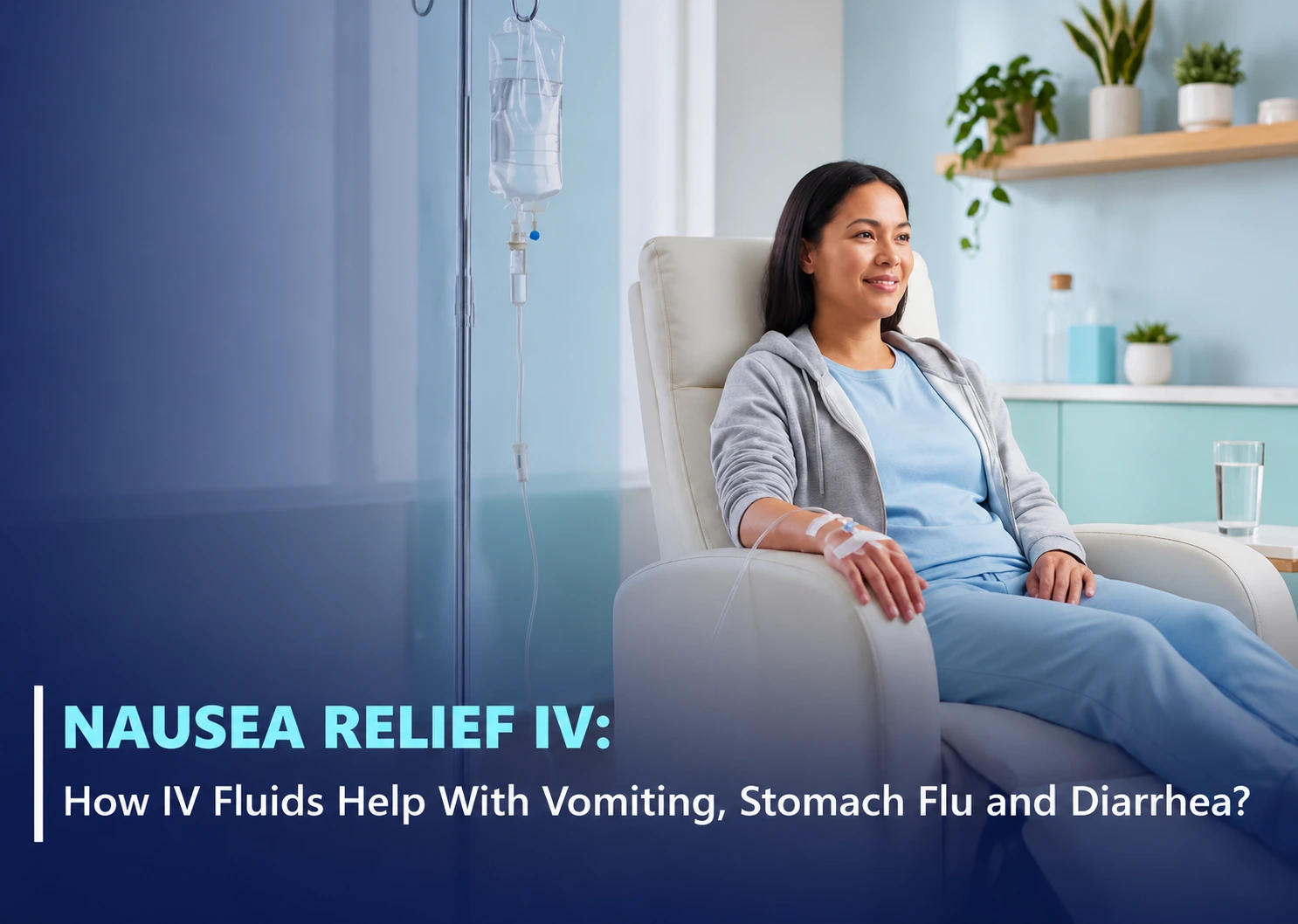
Nausea can stop your whole day. You feel sick, you cannot eat, and even a sip of water may come right back up. When that goes on for hours, your body starts running low on fluids. A nausea relief IV puts fluids straight into your vein so your body can rehydrate without relying on an upset stomach.
This guide explains how IV therapy for nausea works and what it can and cannot fix. You will also learn when to get IV fluids for vomiting and when home care is enough. The goal is to help you make a safe choice when your stomach is in charge.
Already feeling too sick to wait it out? Our registered nurses can help you rehydrate at our Dallas clinic. If you have been vomiting, contact Infinite Dripz or call (469) 336-3540 so we can plan your visit and get you comfortable quickly.
What Is a Nausea Relief IV?
A nausea relief IV is a bag of sterile fluid that drips into a vein in your arm through a thin, soft tube. The fluid is usually normal saline, which is salt water that is close to the salt content in your blood. Many IV drips for nausea also include electrolytes and vitamins. A trained nurse places the line and watches you during the treatment.
How IV Fluids Work Differently Than Drinking Water
When you drink water, it has to pass through your stomach and get absorbed in your gut. During a bout of vomiting, your stomach may push it back out before that happens. IV fluids skip your stomach completely. They go right into your bloodstream, so your body starts getting the fluid it needs within minutes.
Fluids First, Medicine Second
Most of the relief from an IV comes from fixing dehydration. Being low on fluids can make nausea, headaches and dizziness worse, so refilling your tank often helps you feel steadier. A hydration IV drip can help replenish fluids and electrolytes when your body needs additional support. Some clinics and hospitals also give anti nausea IV medicine such as ondansetron, often known as Zofran. This prescription drug blocks the signals that tell your brain to vomit. Ask the clinic ahead of time which options it offers and whether a provider needs to approve them.
Why Vomiting and Diarrhea Drain You So Fast
Your body is mostly water, and it guards that water closely. Vomiting and diarrhea break that system down quickly because both push fluid out faster than you can replace it. Here is what happens behind the scenes when a stomach bug takes over.
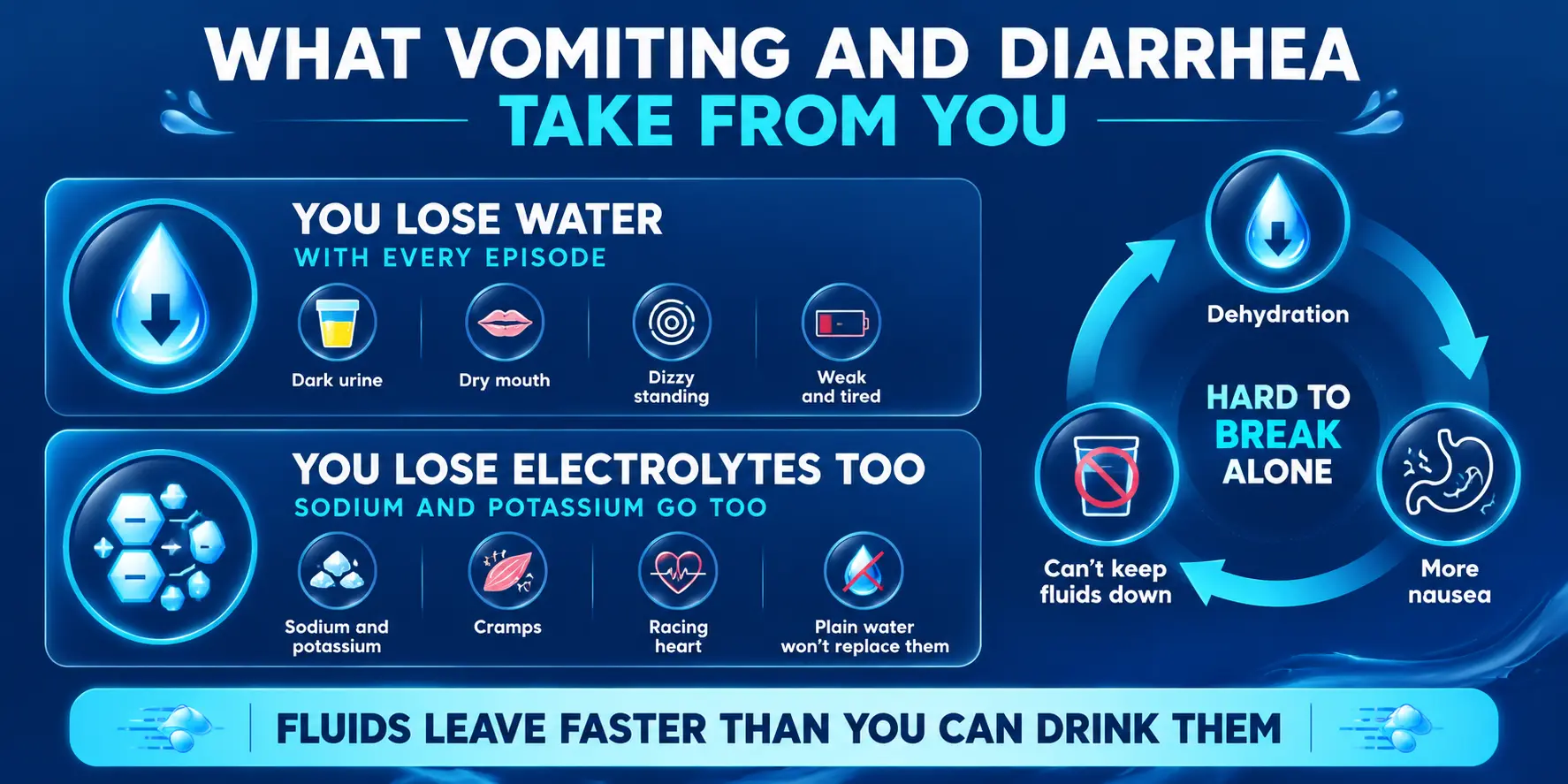
You Lose Water With Every Episode
Each time you vomit or have watery diarrhea, you lose fluid your body is using. A single day of stomach illness can leave an adult noticeably dry. Signs you are running low include dark yellow pee, peeing less often, a dry mouth and feeling dizzy when you stand up. You may also feel tired and weak even after resting.
You Lose Electrolytes Too
Electrolytes are minerals like sodium and potassium that carry tiny electrical signals in your body. They help your muscles move, your heart beat steadily and your nerves send messages. Vomiting and diarrhea wash these minerals out along with the water. Plain water does not replace them, which is why low electrolytes can cause cramps, weakness and a racing heart.
The Sip-and-Vomit Cycle
Dehydration can make nausea worse, and nausea makes it hard to drink. That loop can keep you stuck for hours. You try to drink, your stomach rejects it and you get even drier. IV fluids for nausea and vomiting can break this cycle by rehydrating you without asking your stomach to do any work.
IV Fluids for Stomach Flu
The “stomach flu” is not really the flu. It is usually viral gastroenteritis, which means an infection that inflames your stomach and intestines. Norovirus is a common cause in adults. Symptoms often start 12 to 48 hours after exposure and include nausea, vomiting, diarrhea and stomach cramps. Most healthy adults feel better within one to three days.
IV fluids for stomach flu do not kill the virus. Your immune system handles that job on its own. What an IV can do is keep you hydrated while your body fights the infection. That support may help you feel less weak and dizzy, which makes the rough days easier to get through.
Protect Your Household From Norovirus
Norovirus spreads very easily, so call the clinic before your visit if you have been vomiting. Letting the staff know your symptoms helps them plan your care safely. At home, wash your hands with soap and water, since hand sanitizer does not work well against norovirus. Clean hard surfaces with a bleach-based cleaner to protect the rest of your household.
IV Treatment for Diarrhea: What It Can and Cannot Do
IV treatment for diarrhea replaces the fluid and electrolytes you lose. It does not stop the diarrhea itself. Think of it like refilling a leaking bucket while the leak slowly seals on its own. Most diarrhea from a viral bug clears up in a few days as your gut heals.
Diarrhea needs a doctor’s visit when it lasts more than two days in an adult, comes with a high fever or contains blood.Black, tarry stools also require immediate medical attention. These signs can indicate a bacterial infection or another issue that fluids alone will not resolve. A doctor can run tests and decide if you need other treatment.
When to Get IV Fluids for Vomiting
Not every upset stomach needs an IV. Many people with mild nausea can rehydrate at home with a little patience. The key is knowing when home care is working and when it is not.
Try Small Sips First
After you vomit, give your stomach about 15 to 30 minutes to rest. Then start with tiny sips of an oral rehydration drink, about one or two teaspoons every few minutes. These drinks have the right mix of salt and sugar to help your body absorb fluid. If that stays down, slowly take bigger sips over the next few hours.
Signs Home Care Is Not Enough
An IV for nausea makes sense when you cannot keep even small sips down for several hours. It may also help when you are peeing very little, your pee is dark or you feel dizzy and weak. Some people simply feel wiped out after a day of vomiting and want to recover faster. In those cases IV therapy for nausea can be a gentle and helpful option.
People Who Dry Out Faster
Some people get dehydrated faster than others. Older adults may not feel thirsty until they are already low on fluids. Athletes and people who work outdoors lose extra water through sweat, and Dallas summers add even more heat stress. If you fall into one of these groups, do not wait too long to get help when vomiting will not stop.
When Nausea Relief IV Therapy Does Not Work
An IV clinic is a good fit for mild to moderate dehydration in otherwise healthy adults. Some symptoms need an emergency room right away because they may point to something more serious like:
- Vomiting blood or material that looks like coffee grounds
- Severe belly pain that keeps getting worse
- A stiff neck, confusion or a sudden severe headache
- Chest pain or trouble breathing
- Fainting or no pee for eight hours or more
- Vomiting after a head injury
Check With Your Doctor First If This Applies to You
Some people need a doctor’s input before any IV treatment. Anyone who is pregnant should talk to their OB provider, since severe morning sickness needs medical care. People with heart failure or kidney disease should also check first because extra fluid can strain these organs. Anyone with diabetes who is vomiting should call their doctor, since vomiting can quickly upset blood sugar. Young children should see a pediatrician.
Do Vitamins in an IV Drip Help Nausea?
Many IV drip for nausea menus list vitamins like B12 and vitamin C, so it helps to be honest about what they do. The fluid and electrolytes are what ease dehydration. There is little strong evidence that B12 or vitamin C stops nausea directly. Vitamins may still support your energy while you recover, especially if you have barely eaten for a day or two.
If you want a drip that pairs fluids with a broader vitamin blend, the Myers Cocktail IV is a well-known option people often ask about. It combines hydration with B vitamins, vitamin C and magnesium. Your nurse can help you decide whether it fits your recovery goals or whether simple hydration is the better choice.
Once your stomach settles, some people want a quick energy lift instead of a full drip. A vitamin shot takes only a few minutes and does not need an IV line.
What to Expect During and After Your IV
Knowing what happens before, during and after treatment can make your visit feel easier. The process is simple, and most of the time is spent resting.
Before Your Visit
At Infinite Dripz, first-time clients complete a good faith exam by telemedicine. A licensed provider reviews your health history and symptoms to make sure an IV is safe for you. Have a list of your medicines ready and share how long you have been sick. This short step helps the team choose the right treatment.
During the Drip
A registered nurse cleans your arm and places a small catheter in a vein. You may feel a quick pinch, then little else. Most one-liter drips take about 45 minutes to an hour. You can rest, close your eyes or scroll on your phone while the nurse checks on you.
Eating and Drinking Afterward
Keep sipping fluids after your IV, since your body may still be losing some water. Bring food back slowly with bland choices like crackers, toast, rice, bananas or applesauce. Skip greasy or spicy foods, alcohol and lots of caffeine for a day or two. Rest as much as you can so your gut has time to heal.
Why Choose Infinite Dripz for Nausea Relief IV Therapy in Dallas
A nausea relief IV makes sense when vomiting or diarrhea leaves you dehydrated and you cannot keep fluids down at home. At Infinite Dripz, every drip includes a full liter of fluid, so hydration is the core of your treatment. All drips are given by trained registered nurses, and a good faith exam is completed by telemedicine before your first visit.
For stomach flu recovery, the hydration drip is built to restore fluids and electrolytes quickly. If you also want vitamin support, your nurse can walk you through our other vitamin IV drips during your consultation. Vitamin shots, including B12, are another option once you feel steadier and want a quick boost.
Our Dallas clinic is at 6050 N Central Expy, Suite 100, an easy drive for clients coming from Lower Greenville, Uptown and Knox Henderson. If you have been vomiting, call (469) 336-3540 before you come so we can plan your visit. Schedule your nausea relief IV online or contact Infinite Dripz today to start feeling like yourself again.