Most IV infusion side effects are mild and temporary. Bruising, tenderness, a little swelling and soreness around the site are common after catheter placement or removal and they usually settle within a few days without any treatment.
The symptoms that matter are the ones that get worse rather than better. Severe pain, swelling that keeps increasing, spreading redness, warmth, drainage or fever are different and those need medical evaluation rather than waiting them out.
How much you notice depends on where the IV was placed, how easily it went in, what was infused and how quickly you bruise. This guide covers what is normal, why it happens, how long it lasts, what helps and when to call.

What Are the Common Side Effects of IV Infusion?
The usual IV infusion side effects are localized to the arm or hand where the catheter sat:
- Bruising at or near the insertion site, often appearing a day later
- Mild pain or tenderness, worse when you press on it
- Minor swelling around the site
- Temporary vein irritation, sometimes felt as a tender line along the vein
- Redness immediately around the puncture, fading over a day or two
Almost everyone experiences at least one of these and none indicate anything went wrong. Most IV infusion side effects stay confined to that small area rather than affecting how you feel generally.
Does Getting an IV Hurt?
Does getting an IV hurt? Briefly, at the moment of insertion. Most people feel a sharp pinch for a few seconds, similar to a blood draw. IV insertion can hurt slightly, especially when the IV is placed in the hand, but the discomfort should not continue once the catheter is in place.
What You May Feel During IV Insertion
Expect a sharp pinch lasting a few seconds, much like a blood draw, sometimes with brief pressure as the catheter advances. The answer to getting an IV hurt more than a blood draw is usually no, though a hand placement is more sensitive than the forearm because the skin is thinner and there are more nerve endings.
Should an IV Hurt During the Infusion?
No. Once the needle is withdrawn and only the soft catheter remains, you should feel nothing beyond mild awareness of the site. An IV should not hurt once it is in place. If your IV hurts in your arm or hand, especially if the pain is getting stronger, tell your nurse rather than waiting for it to pass.
Is an IV supposed to hurt while fluid is running? Not at all and this is the most useful thing to know. Pain, burning or stinging during an infusion is a signal, not something to tolerate politely. Tell your nurse immediately, because the rate can be slowed or the line repositioned before a small problem grows. A cool sensation traveling up the arm is normal and different from pain. For a fuller walkthrough of IV placement, drip speed and session timing, see our guide to how long IV fluids take and what to expect.
Why Does an IV Cause Bruising?
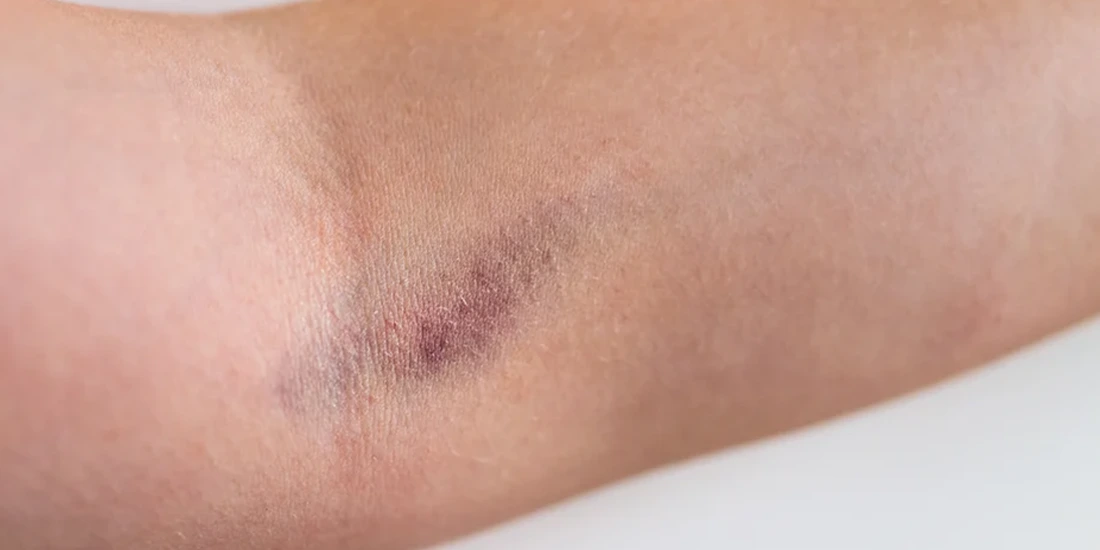
An IV bruise forms when blood escapes the vein into surrounding tissue. It is the most common side effect and rarely means anything went wrong.
How IV Insertion Causes a Bruise
The catheter passes through the vein wall, which leaves a small opening. Some blood leaks out before it seals and that trapped blood is what you see as bruising after IV placement or removal over the following days. This is why a bruise where the IV was can appear even after the catheter has been taken out.
An IV bruise hand placement is more visible than a forearm one, since there is less tissue to hide it. Bruises typically appear within twenty four hours, darken, then fade through green and yellow over one to two weeks. The usual IV bruise healing time is about one to two weeks, although a larger bruise can take up to three weeks to fully fade.
You are more likely to bruise if you take blood thinners, aspirin or fish oil, if the vein needed more than one attempt, if pressure was not held long enough after removal or simply because you bruise easily.
When a Bruise Becomes a Hematoma
A hematoma from IV treatment is a larger collection of blood under the skin. A hematoma after IV removal feels firm or lumpy rather than flat and is usually more tender than an ordinary bruise. Small ones resolve over a few weeks, but a bad bruise from IV placement that keeps expanding, becomes hard and very painful, or limits movement should be looked at. A lump on the vein after an IV can also occur with vein irritation and should be monitored, particularly if it becomes more painful or red. Most arm bruises after IV cases are cosmetic; a growing one is not.
Why Is My Arm Swollen After an IV?
Mild puffiness around the site is common and settles quickly. The concern is swelling that appears during an infusion or keeps increasing afterward.
IV Infiltration and Fluid Leakage
Infiltration happens when the catheter slips out of the vein or the vein is punctured through and fluid enters surrounding tissue instead of the bloodstream. Because the fluid has nowhere to go, the area swells.
Signs during an infusion include an arm swollen after IV fluid running, skin that feels cool and tight, burning at the site and a drip that slows or stops. Say something the moment you notice arm swelling after IV fluid starting. Most infiltration is minor and resolves once the IV comes out, though some medications are more damaging in tissue, which is why prompt reporting matters more than politeness.
Swelling After IV Removal
Swelling after IV removal is usually just the body’s inflammatory response to a small puncture, sometimes with a little residual fluid if minor infiltration happened before the line came out.
Expect it to be mild, localized and improving within twenty four to forty eight hours. Mild swelling after an IV is usually normal when it stays small and starts improving. If you have swelling in your hand after an IV, keeping the hand elevated and using a cold compress can help reduce discomfort and swelling.
When IV Related Swelling Needs Attention
Wondering what to do if the IV site is swollen after you get home? Elevate the limb, apply a cold compress and watch the direction it takes over the next day.
Contact your provider if swelling increases rather than settles, spreads up the arm, comes with significant pain, makes the skin tight, shiny or discoloured, restricts movement or is accompanied by numbness, tingling or coolness in your fingers.
Why Does the Vein Hurt After an IV?
Vein hurts after IV treatment is a different sensation from a bruise. It follows the line of the vein rather than sitting in one spot.
Irritation From the Catheter, Fluid or Medication
The catheter is a foreign object inside a blood vessel and the vein wall reacts to it. Longer dwell times, larger catheters and awkward placements all increase irritation.
Certain fluids irritate more than others. Concentrated potassium, some antibiotics and highly acidic or alkaline solutions are known for it, which is why they are diluted or infused slowly.
Phlebitis and Vein Inflammation
Phlebitis is inflammation of the vein itself, producing pain along the vein rather than at one point, redness tracking up the arm, warmth and sometimes a firm cord-like feeling under the skin. Mild cases resolve within days. If you are wondering why my IV hurts several days later and the discomfort follows a line up your arm, call your provider, particularly if redness is spreading or you feel unwell.
How Long Should Arm Hurt After IV Treatment?
Asking how long should your hand hurt after an IV is reasonable and for most people tenderness fades within one to three days. Mild arm pain after IV removal can happen because of irritation at the puncture site, while bruising lasts longer, usually one to two weeks and looks worse before it looks better.
Vein irritation can take a week or so to settle fully. If your vein hurts after an IV, mild irritation may take several days to settle. However, pain that continues for two weeks, gets worse instead of better, or is associated with redness, warmth or swelling should be evaluated.
What is not normal is pain in the arm after IV drip treatment that stays the same or worsens after seventy two hours, pain severe enough to disturb sleep or limit use of the arm or pain that appears days later having initially been fine. Any of those warrant a call.
How to Reduce Swelling After Drip and IV Bruising
Simple measures manage most IV infusion side effects at home:
- Keep the area clean and leave the bandage on for a few hours, then wash gently with soap and water
- Rest the arm or hand, avoiding heavy lifting or repetitive gripping for a day
- Apply a cold compress for fifteen to twenty minutes at a time during the first day or two, which helps both bruising and swelling
- Elevate the limb above heart level when you can, which is the most effective way to get rid of swelling from IV fluids
- Follow your provider’s instructions, particularly on whether to switch to warm compresses after the first couple of days
If you are wondering how to treat an IV bruise or sore IV site, the main steps are rest, cold compresses and elevation while watching for signs that the problem is getting worse.
If you are looking for how to get rid of swelling from IV fluids quickly, elevation combined with cold does most of the work. Do not massage firmly over a painful or swollen site. Without knowing whether infiltration or phlebitis is involved, pressure can make things worse. If you want to know how to reduce pain in the hand after IV placement specifically, elevation and cold do more than anything else in the first forty eight hours.
When Are IV Infusion Side Effects a Warning Sign?
Contact a healthcare professional promptly for any of these and go to urgent or emergency care if several appear together:
- Severe or increasing pain rather than pain that eases each day
- Rapidly increasing swelling, especially spreading up the arm
- Spreading redness or significant warmth, particularly tracking along the vein
- Drainage or pus at the site
- Numbness, tingling or colour changes in the hand or fingers
- Fever, chills or feeling generally unwell in the days afterward
- Blistering or skin breakdown over the site
None of these should be assumed to be ordinary IV soreness. They can indicate infection, significant infiltration or nerve involvement and all of those are far easier to treat early.
Why Choose Infinite Dripz in Dallas
At Infinite Dripz, treatments are administered by trained registered nurses who monitor the IV site throughout the session. You can learn more about the Infinite Dripz medical team, and first-time clients complete a Good Faith Exam for IV therapy by telemedicine before treatment.
- Vitamin IV drips across six formulations, each with a full liter of fluid delivered at a controlled rate
- Vitamin shots including B12 and vitamin D when you would rather avoid an IV line entirely
- Memberships at $180 a month for a monthly drip plus a free B12 shot and 20% off other services
The clinic sits at 6050 N Central Expy, Suite 100, easy to reach from Uptown Dallas, Knox Henderson, Lakewood and Highland Park. Call (469) 336-3540 or book online with any questions about a previous site reaction before your appointment.