If you enter any skin studio, these two names will keep repeating over and again. One of the biggest points of confusion people have when deciding on Hydrafacial vs Microdermabrasion is that they’re looking to improve their skin without needles, lasers or recovery time. They both are non-invasive, they both remove dead surface cells and they both make your face look brighter the same day.
It’s the difference in the functions of the two and what your skin actually requires. One soaks the skin with moisture while cleaning. The other sands remove the top layer of sand, smoothing it. Choosing a facial rejuvenation treatment depends mostly on the type of skin you have, your primary concern and the sensitivity of your face.
Both are detailed in this guide in simple terms to help you prepare for your appointment. The difference between hydrafacial and microdermabrasion is simpler than it looks.
What Is a Hydrafacial?
The Hydrafacial treatment is a medical-level facial that cleanses, exfoliates, extracts and hydrates the skin in a single procedure with the aid of a handheld device with a spiral tip. Not scratching or rubbing the face dry, but gently circulates water and solutions to remove debris from pores.
The entire session typically lasts 30-45 minutes. No peeling, no flaking and no need to stay indoors afterwards. Most go directly to work or out for dinner.
How a Hydrafacial Works
While liquid is flowing over the skin, the device produces light suction. This suction, in turn, removes oil, dead cells and buildup from the pores and the liquid takes them away. The skin remains moist throughout, which doesn’t cause any stripping or irritation like a dry scrub does.
The chemical exfoliation is carried out with a mild acid solution which helps to break the connection between dead cells, allowing them to peel off. The same piece of equipment then pumps it back in. The last step of the process is serum infusion, which is responsible for the signature plump, dewy look of Hydrafacial.
The Three Step Hydrafacial Process
All four sessions are identical, except the solutions are varied depending on skin.
- Cleanse and exfoliate: A gentle resurfacing tip lifts away dulling surface cells and preps the skin.
- Extract impurities: Painless suction clears out oil, dirt and blackheads without the pinching of manual extractions.
- Hydrate with customized serums: Antioxidants, peptides and hyaluronic acid are delivered straight into the fresh skin.
That third step, which is the one reason that many people consider a Hydrafacial to be more than just a good facial cleansing, is the reason that many people consider it to be “hydration therapy for the face.”
What Is Microdermabrasion?
Microdermabrasion treatment is a mechanical peel where the outermost layer of dead skin cells is buffed away using either fine crystals or an abrasive tip. It has been around for decades and it remains one of the most effective ways of achieving a smooth, even texture.
Sessions last as little as thirty minutes and are usually only mildly scratchy. There may be a slight pinkness to the skin for a few hours after and then it will calm down.
How Microdermabrasion Removes Dead Skin
The skin is stretched over the handpiece and suction is applied. The harsh surface sands down the stratum corneum, the layer of dead cells that’s on top.
This is a very helpful thing to do when you remove that layer. The skin has a better reflectivity and the texture appears smoother at first. It also activates a slight repair process below which assists in collagen stimulation over the course of sessions.
Crystal vs Diamond Tip Microdermabrasion
There are two types of the same concept and clinics usually provide one or the other.
- Crystal method: Fine aluminum oxide crystals are sprayed onto the skin and then vacuumed up, along with the debris. Effective, but may leave residue and feel gritty.
- Diamond-tip microdermabrasion: The buffing is done with the help of a wand which is coated with diamond particles and no loose diamond crystal whatsoever. It is easier to control around the eyes and nose, is cleaner and just more comfortable.
The diamond wand is the most common practice in modern days as it can give more precise skin resurfacing.
Hydrafacial vs Microdermabrasion: What Is the Difference?
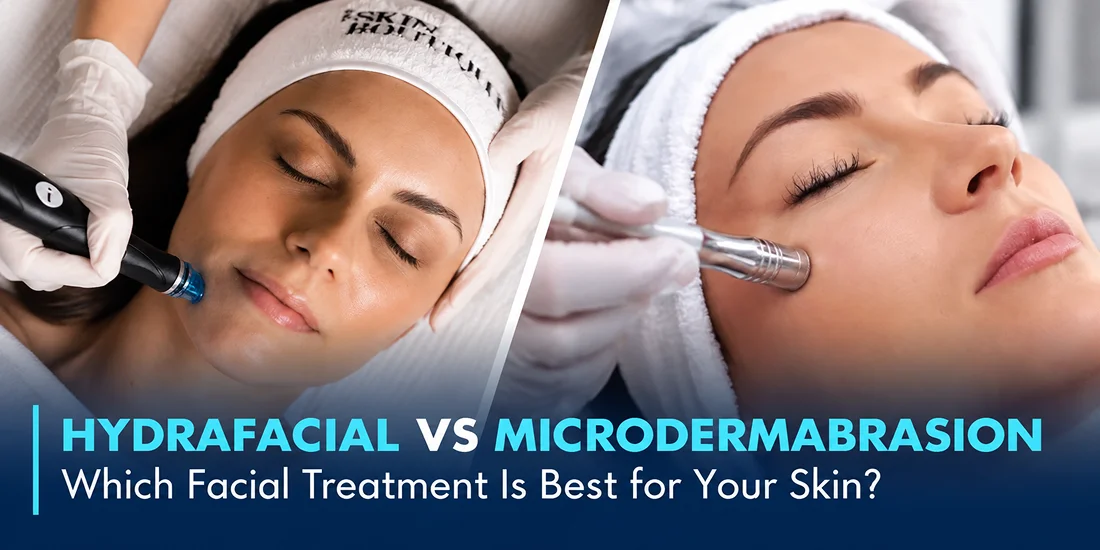
If you are wondering what is a hydrafacial vs microdermabrasion at the most basic level, think of it this way. A Hydrafacial cleans and feeds the skin. Microdermabrasion sands and smooths it. The difference between microdermabrasion and hydrafacial shows up in almost every part of the session.
Treatment Technology
Hydrafacial combines the power of water pressure, vacuum suction and liquid solutions. Unlike most other skin exfoliation methods, microdermabrasion doesn’t use any fluids. It’s all about the physical wear and tear caused by crystals or a tip coated with a diamond.
This one difference makes most of the rest of it obvious, right from the start of how they feel to who to book with.
Depth of Exfoliation
Microdermabrasion is a bit deeper and can be up or down for a particularly coarse or fine finish. Hydrafacial maintains the depth of exfoliation, avoiding any harshness or unevenness that could be detrimental for thin or reactive skin.
Don’t assume that deeper is better. Too strong a product on sensitive skin will irritate and negate the good.
Hydration vs Resurfacing
This is the easiest dichotomy between the two. The moisture replenishment of the skin by hydrafacial stops when the buff stops and the antioxidants are delivered. That last step of closing the skin with hydration is more significant than you realize if it’s dry, tight skin.
Comfort During Treatment
A typical patient would describe a Hydrafacial as a cool, gentle pulling sensation, somewhat like relaxing. Microdermabrasion is like sandpaper rubbing up against your face. It’s not grossly unpleasant, but it’s a little more abrasive. Both the ones don’t need numbing cream.
Downtime
Both are said to be no-downtime treatments. Hydrafacial has none at all and skin can look better right away.
A temporary redness or warm flushed appearance may occur with microdermabrasion, typically subsiding in a few hours.
Recovery Time
The only thing you can’t recover from is a Hydrafacial. Makeup can be worn the same day, although most individuals do not put on makeup as their skin appears fine without it.
The skin is more sensitive for approximately 48 hours following microdermabrasion. Sunscreen is no longer a choice and powerful products such as retinol need to take a break for a couple of days.
Immediate Results
Hydrafacial instantly leaves your skin glowing, with smoother pores and a fuller complexion. The microdermabrasion will produce a smoother texture; this will be more noticeable on the day of the treatment rather than when looking at it.
Long Term Benefits
Over time, repeated microdermabrasion will gradually increase the appearance of smoother skin with the support of collagen. Over time, repeated Hydrafacials will help keep pores clear, regulate oil production and keep them hydrated.
Hydrafacial or Microdermabrasion: Which Should You Choose?
There is no universal winner here. So basically, the debate on a hydrafacial microdermabrasion can just be summed up with the most important thing and the most suitable method being used for it.
Choose Hydrafacial If…
- Your skin is dry, dehydrated or sensitive
- You have blackheads and congested pores
- You want a same day glow before an event
- You are prone to redness or irritation
- You have never had a facial and want the gentlest starting point
Choose Microdermabrasion If…
- Your skin feels rough or bumpy to the touch
- You have shallow acne scarring or uneven texture
- Sun damage and dullness are your main complaints
- Your skin is oily and resilient rather than reactive
- You want gradual smoothing across a series of visits
When Either Treatment Can Be Effective
Both are good for general maintenance. Either of the two will help maintain good skin if you just desire brighter, cleaner skin on a regular basis, every four to 6 weeks.
That can be the deciding factor in the budget. People are inclined to compare the hydrafacial vs microdermabrasion cost, with microdermabrasion being the less expensive service as compared to Hydrafacial, which also involves the extraction process and serums in the same visit. Anyone comparing microderm vs hydrafacial on price will notice that gap.
When Neither Treatment Is the Best Option
Sometimes the truth is that you can’t get where you want to go with a surface treatment. The treatments reach only a portion of the skin layers that make up deep acne scars and heavy wrinkling and stubborn pigment.
For those instances, the ideal treatment options are microneedling, prescription topicals or a medical consultation. A reputable provider will inform you that they don’t sell you a package that cannot be delivered.
Hydrafacial vs Microdermabrasion Benefits
Comparing the actual received content of each treatment side by side helps to decide the choice, since there is some overlap but quite a few differences. Microdermabrasion facial vs hydrafacial is easiest to judge benefit by benefit.
Shared Benefits
- Brighter, more even looking skin
- Smoother texture after a single session
- Better absorption of skincare products afterward
- No needles, no anesthesia and no time off
- Safe for most adults when performed by a trained provider
Benefits Unique to Hydrafacial
The suction to remove pores causes no pinching or squeezing, meaning less trauma to the skin. Solutions can be tailored as they go for acne, pigment or aging issues. It also helps to rehydrate the skin, not dehydrate it, leaving it feeling soft and comfortable, not tight.
Benefits Unique to Microdermabrasion
The mechanical action produces a rough texture that the gentler actions do not. It is also widely available and is usually less costly and a longer series is easier to commit to.
This is typically the quicker solution for those who have rough skin on their hands despite the amount of moisturizer they apply.
Hydrafacial vs Microdermabrasion for Acne
Acne makes for a big difference in the numbers. The key to choosing an appropriate pick for breakout skin is whether it is an active breakout or if it has been healing.
Active Acne
Hydrafacial is a better option when you are experiencing a breakout. It helps to clear up congestion without scratching and spreading bacteria over inflamed pimples, leading to irritation.
Active lesions shouldn’t be treated with microdermabrasion; it can tear the skin and make marks.
Acne Scars
If there are scars or marks that have been left behind from past acne, both can help diminish those marks over time. Microdermabrasion may be a little better for raised or pitted scars as it targets the texture directly. For deeper scars, however, anything less than surface exfoliation is not enough.
Congested Pores
Suction and dissolving solutions are effective on clogged pores and so is Hydrafacial. The extraction process is integrated into the treatment process and not an add-on.
Oily Skin
Both help. Microdermabrasion will break up the oil that accumulates and Hydrafacial will dissolve the oil and wash it away. Sensitive, oily skin should go for Hydrafacial.
Dermatologist Recommendations
Most skincare experts advise reducing inflammation first and then deciding which resurfacing procedure to use. They advise avoiding strong retinoids for a few days prior to any facial exfoliation and practicing the sessions no closer than 3-4 weeks apart.
Hydrafacial vs Microdermabrasion for Blackheads
One of the most frequent culprits of getting both treatments is blackheads, so it’s important to take a closer look at what both treatments actually do for a plugged pore.
Which Removes Blackheads Better?
Clearly, it’s a win for Hydrafacial. Blackheads are not on the surface of the pore. They’re buried in the pore and buffing the surface will only remove the visible tip of the blackhead, leaving the plug inside.
Extraction Methods Compared
The Hydrafacial device creates a consistent vacuum pull that pulls up the entire plug. There is also suction in microdermabrasion, but it’s meant to pull the skin taut and not empty the pores, so extractions are typically applied manually after microdermabrasion.
Manual extraction is acceptable, but it does leave a greater amount of redness and it takes longer.
Preventing Future Congestion
Getting rid of blackheads is only half the battle. If they can be kept clear, they require regular cleaning, salicylic acid treatment every few nights, a non-comedogenic moisturizer and maintenance treatment every 4-6 weeks.
Microdermabrasion vs Hydrafacial for Wrinkles
Different priorities come with fine lines. The microdermabrasion vs hydrafacial for wrinkles dilemma is based on the cause of the wrinkles, dry skin or actual collagen loss.
Fine Lines
Because plump skin is less likely to rip and wrinkle, dehydration lines soften in no time after a Hydrafacial. When a face is at rest, etched lines should be deeper, just like the microdermabrasion that is offered.
Skin Firmness
Neither treatment leads to any significant tightening of the skin. Both can help to make the surface appear more refined, which appears firmer, but there is a need for a different approach for real laxity.
Collagen Production
This is the process that makes new collagen when an injury occurs. This process is responsible for the process of controlled injury, which triggers the body’s formation of new collagen. Microdermabrasion makes that signal milder.
That’s why a series of treatments is likely to elicit a greater long-term change than one treatment. Microneedling goes much deeper and is a more direct approach to restoring collagen. Microneedling vs hydrafacial is a different comparison entirely.
Anti Aging Results
In this case, realistic expectation is paramount. Both will help you to have smoother, brighter, healthy-looking skin. Don’t expect to see any wrinkles from either alone.
Hydrafacial Before and After: What Results Can You Expect?
Photos labeled hydrafacial before and after can set unrealistic expectations, since lighting and makeup do a lot of work. Here is what genuinely happens.
Immediate Improvements
Immediately after the session, pores become cleaner, skin is brighter and the surface is smooth and cushioned. The redness is very little and makeup is applied better the following morning.
Results After Multiple Treatments
Most people see fewer blocked pores, steadier skin tone and skin that doesn’t become too oily or too dry between treatments by the 3rd or 4th monthly session. Absorbation enhances all other products.
Realistic Expectations
They are at their best 5-7 days after and slowly come down. It is a maintenance treatment and doesn’t replace your daily sunscreening and routine.
Factors That Affect Results
- Your baseline skin health and hydration levels
- How consistent your home care routine is
- Sun exposure between appointments
- Hormones, sleep and stress
- How often you schedule sessions
Can You Combine Hydrafacial With Microdermabrasion?
Most people don’t realize that hydrafacial and microdermabrasion are used together, but seldom on the same day.
Is Combination Therapy Safe?
It is best to do them sequentially in a single visit or at least not to do them concurrently. They could be alternated in the same treatment plan or combined to provide greater benefits than repeated use of any one method.
When Providers Recommend Combining Treatments
Using hydrafacial with microdermabrasion on an alternating schedule makes sense when you have two goals at once, such as rough texture plus persistent congestion. A common pattern is microdermabrasion one month, Hydrafacial the next.
Benefits of Combination Facial Rejuvenation
One will provide you with texture correction, while the other will give you deep cleansing and hydration. This alternating rhythm will allow the skin barrier to recover after each application and reduce the risk of irritation.
Avoid combining products with rosacea, eczema and active cystic acne, melasma and very reactive skin. Isotretinoin users should not take the drug for at least six months.
Why Choose Infinite Dripz for Hydrafacial and Skin Treatments
Skin care at Infinite Dripz in Dallas is not seen as a standalone service; it’s part of a larger, more comprehensive wellness program. Each appointment begins with a discussion about your skin, your past and what it is you really want to make happen.
- Hydrafacial treatment for cleansing, extraction and hydration in a single relaxed session
- SkinPen microneedling when your goals call for deeper collagen work than surface exfoliation can provide
- IV therapy drips with ingredients like glutathione, vitamin C and biotin that support skin from the inside
- Vitamin injections including B12, vitamin D and NAD+ for energy and everyday wellness
All services are performed by trained registered nurses and a good faith exam is completed by telemedicine before your first treatment. The clinic sits at 6050 N Central Expy, Suite 100 and is easy to reach from Uptown, Knox Henderson, Lakewood, Highland Park and North Dallas.
If you are not sure which option fits, a short consultation is the fastest way to find out. You can call (469) 336-3540 or book online at a time that works for you.
Conclusion
The hydrafacial vs microdermabrasion comparison isn’t about who is the best. It’s about who is better for your skin. Choose hydrafacial for hydration, sensitive skin, blackheads and an instant glow. Opt for microdermabrasion to treat rough, dull, & ageing skin.
How often you can visit is also a factor, as is budget and comfort. When they start to grasp how each of them excels, many people end up using them in turns.
The best thing that can be done is a professional evaluation. Look at the skin, ask the right questions and suggest a course of action that fits your objectives rather than making a guess from an online comparison.