Stress relief IV therapy is a wellness intravenous infusion that contains fluids and vitamin, mineral or electrolyte supplementation for hydration and overall wellness. Clinics sell it to people who are starving and it’s a very good idea when you’ve been sleeping poorly, not eating and living on coffee.
We will cover what a stress focused infusion actually contains, how the treatment works, the benefits that hold up, what the evidence says about IV therapy for anxiety, safety considerations and when professional mental health care is the more appropriate path.
What Is Stress Relief IV Therapy?
Stress relief IV therapy is the use of an intravenous drip of fluids mixed with nutrients like magnesium, B vitamins or vitamin C that are infused in a relaxed clinical environment for approximately 30 to 60 minutes. Not a treatment for a diagnosed condition but a wellness service.
The category has no standard formula. Two clinics can advertise the same calming IV therapy and use noticeably different ingredients, which is why the list of what goes in your bag matters more than the name on the menu.
How Does a Stress Focused Infusion Work?
An infusion is fluids and nutrients directly into a vein, without going through your digestive system at all. Oral supplements must resist stomach acid and absorption decreases with increasing dose. Intravenous delivery skips both limits.
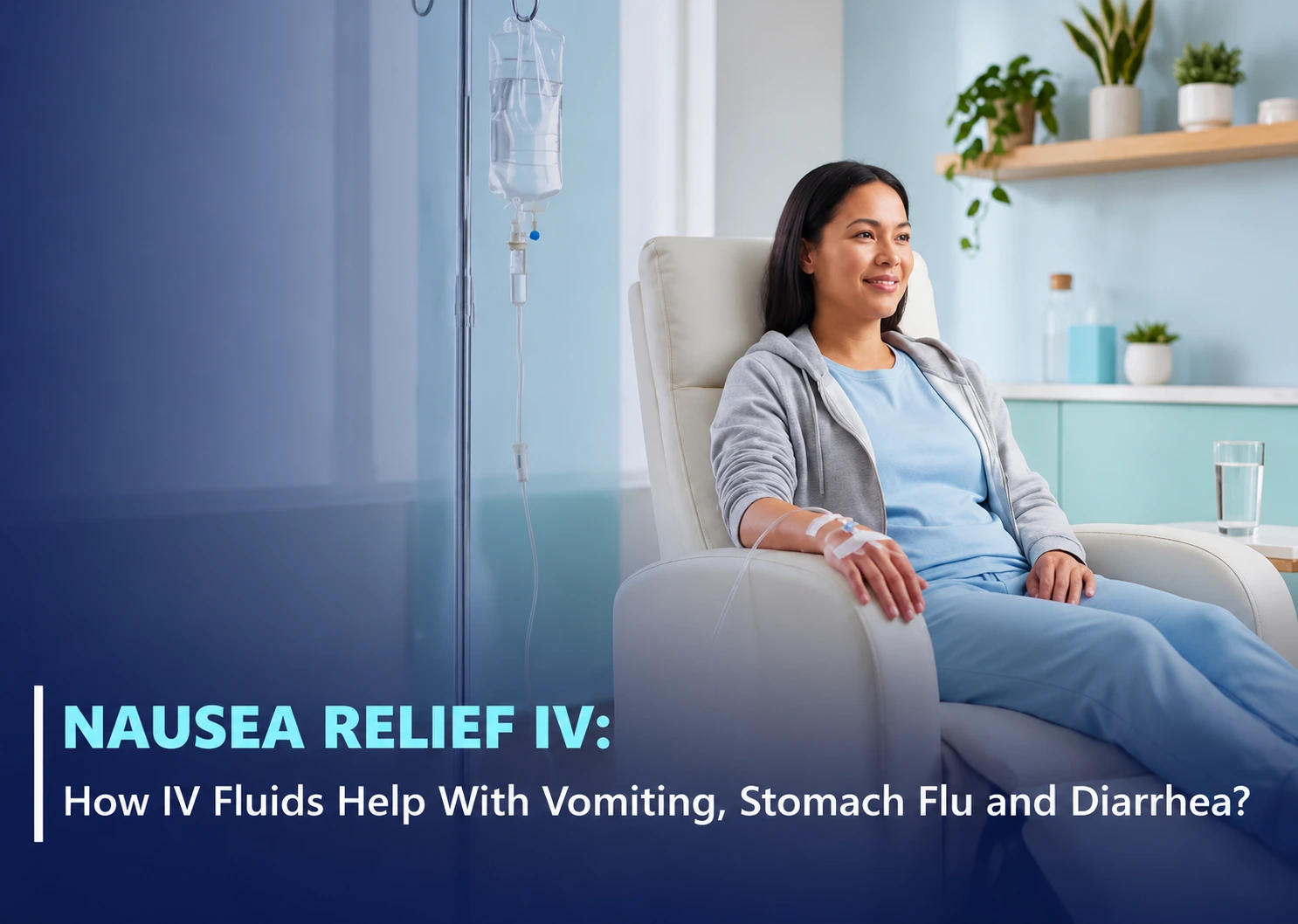
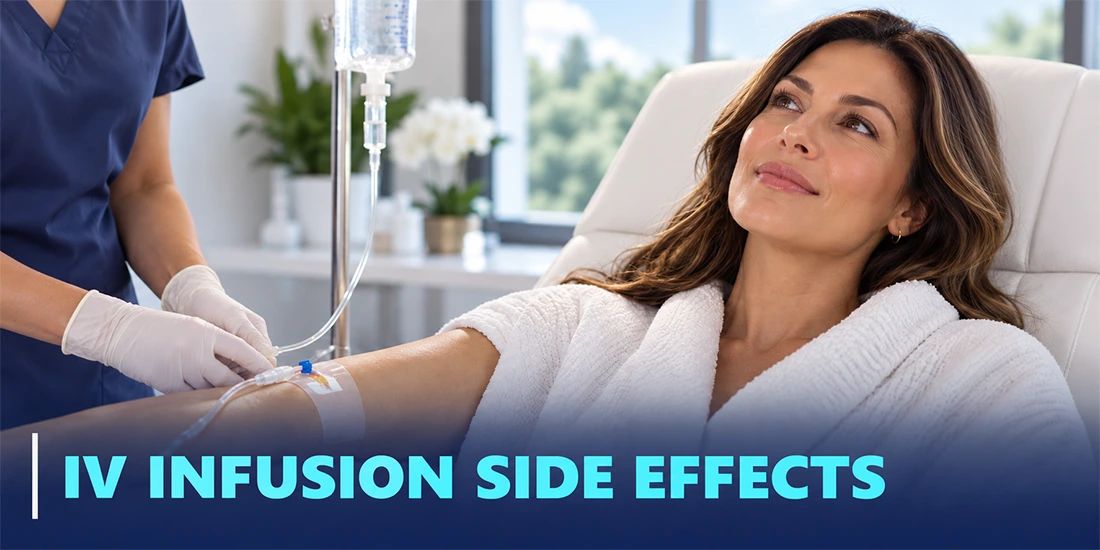
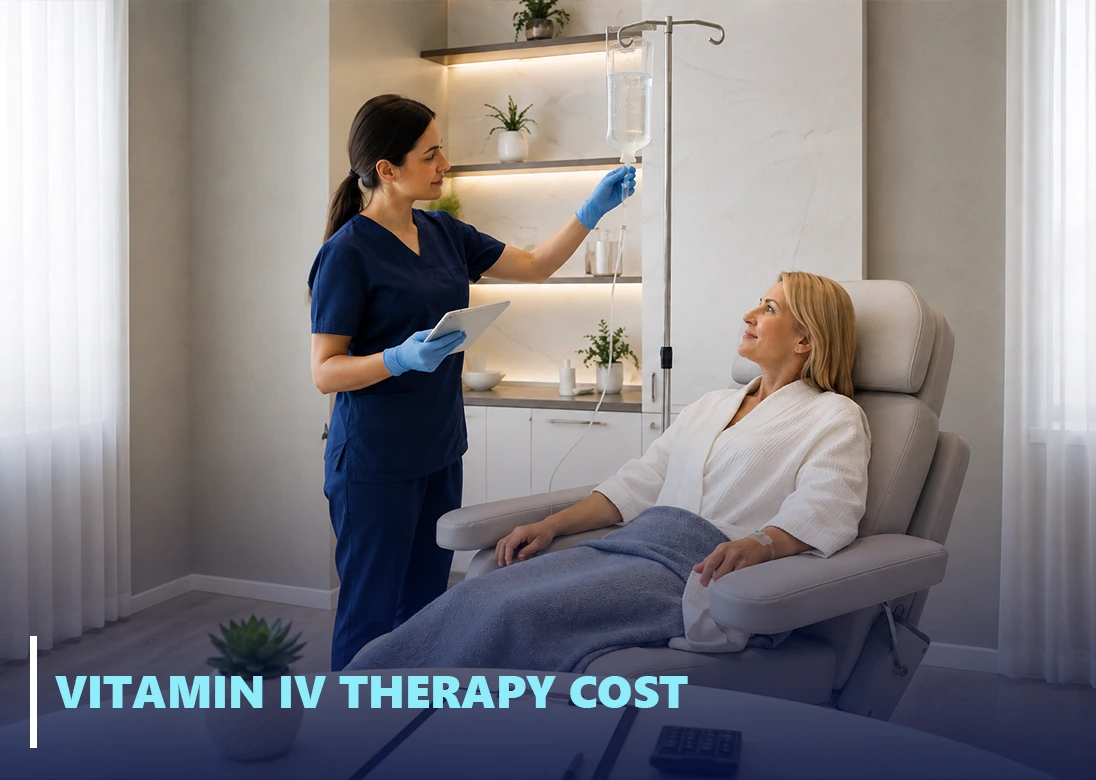
The process of the session is simple. A doctor will examine your health records and medications, take your vital signs, insert a small tube into your arm, infuse it at a controlled speed, supervise you, remove the tube and provide post-procedure care instructions. There is no sedation and no recovery time.
Have something to eat first and take water with you as you go in. Both make you less likely to feel dizzy and make it easier to access your veins, making the least favourite aspect of the visit quicker.
What Makes a Stress Relief IV Different?
A standard hydration bag is fluid and basic electrolytes, nothing more. A relaxation IV drip starts from that same base and adds ingredients chosen for their role in nervous system and energy metabolism, most often magnesium and B vitamins.
The setting is part of the difference too. You are sitting still in a quiet room for an hour with your phone down, which is not nothing when your days are usually the opposite of that.
Who May Consider Stress Relief IV Therapy?
Those who investigate this therapy typically fall into a few categories:
- Adults who drink caffeine excessively or drink hot beverages too late in the day or during hot weather and do not rehydrate as needed
- Anyone with a confirmed nutrient gap who struggles to absorb oral supplements
- People wanting a dedicated hour of rest built into a demanding week
- People who want to maintain general well-being and nutrition along with other practices
Use is totally dependent on the individual’s health requirements, medications and any underlying medical conditions. This isn’t a menu that’s going to make an assessment. It’s a qualified clinician.
Certain individuals should avoid it completely, such as people with heart failure, kidney disease, low blood pressure or a history of severe allergic reactions or pregnant women and nursing mothers, until medical advice is received. If history suggests a lack of responsibility, then they will refuse to treat you. That is good practice, not poor.
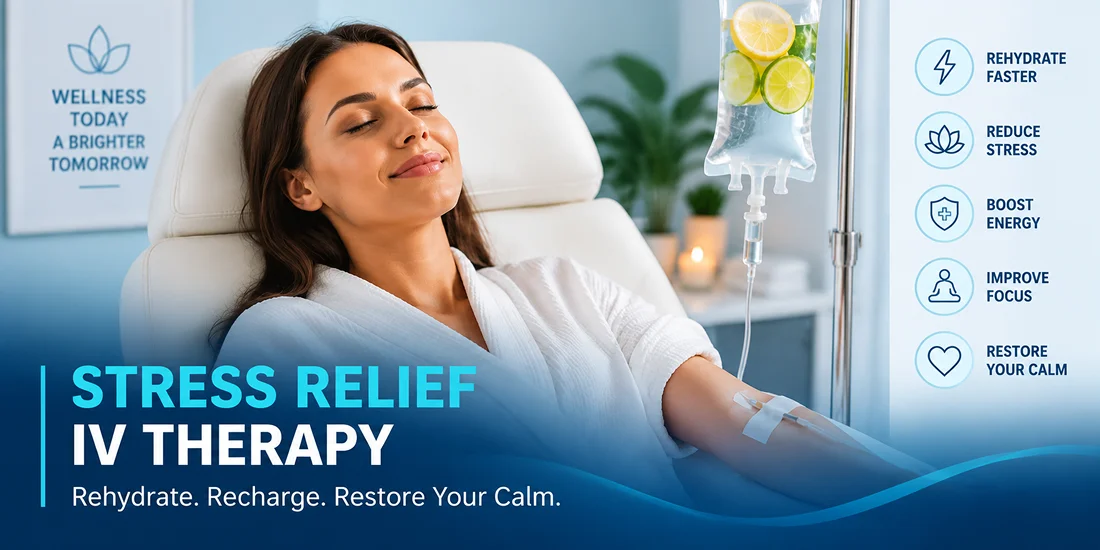
What Are the Potential Benefits of Stress Relief IV Therapy?
The realistic case for IV therapy for stress rests on two things that are well established, plus a third that is more experiential than clinical. Knowing which is which keeps expectations sensible.
Hydration Support
This is the most dependable effect. A full liter of fluid is quicker to correct dehydration than drinking can be and dehydration definitely leads to headaches, fatigue, dizziness and mental fog.
The symptoms may overlap quite a bit with the symptoms of stress and fixing true dehydration can make a world of difference. A straightforward hydration drip covers this without any added complexity.
Nutritional Support
If you have a deficiency or absorption problem, IV delivery is a true solution! Magnesium helps maintain normal muscle and nerve function and B vitamins act as cofactors that your body requires to turn food into energy.
If your levels are already normal, the picture is different. Excess water soluble vitamins are filtered out by your kidneys within hours, so topping off what is already full produces little.
A Dedicated Relaxation and Wellness Experience
This benefit is not pharmacological, but nonetheless, it is a true benefit. There’s no backlash, no distractions, no commitments. An hour of forced quiet has its own worth and many people do say that they feel a bit calmer after the hour.
Be honest with yourself about what is doing the work. If the rest is what helps, that is useful information for how you plan your week.
Why Individual Results Can Vary
Two people can receive identical bags and have completely different experiences. What drives the difference:
- Baseline hydration: The more dehydrated you were, the bigger the shift.
- Nutritional status: Correcting a deficiency shows. Topping off normal levels does not.
- Health conditions and medications: Both change how your body handles fluid and nutrients.
- The formulation used: Ingredients and doses vary widely between clinics.
- What else is happening in your life: An infusion cannot outrun a genuinely overloaded schedule.
Can IV Therapy Help With Stress?
May help relieve symptoms in the short term, primarily because it provides hydration and rest, but will not fix the source of the stress. That’s the most significant part of this page.
What Is Usually in a Stress Relief IV?
Formulations vary, but the common components in an IV hydration solution for stress include:
- Fluids (typically normal saline or lactated ringers) that provide the hydration
- Magnesium is key to normal muscle relaxation, nerve signaling and sleep quality
- B vitamins that help produce energy and maintain nerve function such as B12 and B complex vitamins
- Vitamin C, an antioxidant your body cannot produce on its own
- Electrolytes (sodium and potassium) that keep fluid in your body
- Optional additions like zinc or amino acids, depending on the provider
You can see how different formulations compare across a clinic’s vitamin IV drip menu, since the differences are often larger than the marketing suggests.
How Stress Affects the Body
Adrenaline and cortisol are released in the body when there is a perceived threat. The heart rate increases, breathing becomes more rapid, the muscles tighten and the digestive function decreases. This is good to use in short spurts and it’s helpful when you have to respond quickly.
The problem is sustained activation. When the stress is never off, the same system is responsible for poor sleep, muscle tension, digestive issues, headaches and tiredness, which cannot be remedied by sleep. That is a physiological pattern and it does not resolve because you received nutrients.
What IV Therapy Can and Cannot Do
Can: Help correct dehydration, replace true nutrient deficiencies, offer an hour of rest and facilitate normal physiological function.
Cannot: Treat or cure chronic stress. Replace therapy or medication for an anxiety disorder or fix the situation that is causing the stress. Anyone presenting an infusion as a solution to those things is overselling it.
Lifestyle Strategies Still Matter
The interventions with the strongest evidence for stress are unglamorous and free. They are also the ones that actually change your baseline:
- Sleep: Consistent timing and adequate duration affect stress tolerance more than almost anything else.
- Exercise: Regular movement has solid evidence for reducing stress and anxiety symptoms.
- Relaxation techniques: Breathing exercises, meditation and progressive muscle relaxation have been extensively studied.
- Nutrition: Getting enough protein at regular snack time helps to maintain blood sugar and mood.
- Social support: Connection is one of the strongest protective factors there is.
- Stress management: Boundaries, workload changes and professional support address causes rather than symptoms.
An infusion can sit alongside these. It cannot substitute for them.
Is There an IV Hydration Solution for Stress?
There are plenty of drips marketed that way, though none are formulated or approved as a stress treatment. What exists is hydration and nutrient support, sold under a stress focused name.
Why Hydration May Matter During Stress
The moments that are stressful often bring along dehydration habits. Coffee, water (less), no meals, evening drinks and poor sleep. Fatigue, irritability and lack of concentration are then caused by dehydration.
Research has found that even mild dehydration can worsen mood and reduce concentration. Correcting it removes a compounding factor. It does not remove the stressor.
Hydration vs Treating the Underlying Cause of Stress
Treating dehydration and treating chronic stress are two different projects. The first is a straightforward physiological fix with a predictable result. The second involves your circumstances, your habits, your sleep and sometimes clinical care.
Think of an infusion as removing one obstacle rather than solving the problem. That framing keeps stress relief IV therapy useful without making it a substitute for something more effective.
It also helps explain why results fade. Once hydration is corrected, it will last for hours and stay that way for a day or two (which is the right length of time to measure, not for a lifetime).
What Is an IV for Anxiety Supposed to Do?
Marketing for an IV for anxiety usually implies calming effects from magnesium and B vitamins. What these infusions actually provide is hydration and nutrient support, which is a meaningfully different claim.
Why Anxiety Treatment Requires a Broader Approach
Anxiety disorders are medical illnesses that can be clinically diagnosed and treated using treatments proven to be effective in large, clinical trials. So do several classes of prescription medication and so does structured exercise as an adjunct.
These treatments work because they address how anxiety functions, through thought patterns, behavior and brain chemistry over time. A single infusion does not engage with any of that. If anxiety is affecting your sleep, work or relationships, a doctor or therapist is the appropriate starting point and that is worth acting on rather than postponing.
Evidence vs Marketing Claims
Here is where IV therapy for stress and anxiety claims outrun the science. There are some clinics you may come across that spout a lot of words about anti-anxiety infusions and how it balances the chemicals in the brain and how it gets rid of nervousness. Large controlled trials with IV nutrient therapy showing efficacy in treating anxiety disorders are lacking.
The individual ingredients are better understood than the treatment as a whole. A deficiency of magnesium has been linked to symptoms of anxiety and magnesium supplementation might help correct a real deficiency. That’s not the same as an infusion for a person with a normal level of magnesium who is still having anxiety.
If a provider promises relief, is discouraging you from seeing your doctor or suggests an infusion as a substitute for taking medication or therapy, be wary of this company. These are indicators to leave.
Why Choose Infinite Dripz for IV Therapy in Dallas
At Infinite Dripz, every session starts with an honest conversation about what an infusion can realistically do and what it cannot. All services are performed by trained registered nurses and a good faith exam is completed by telemedicine before your first treatment.
- Vitamin IV drips in six formulations, each delivered in a full liter of fluid so hydration is genuinely part of the treatment
- Vitamin injections including B12, vitamin D and NAD+ when you want something quicker than a full infusion
The clinic sits at 6050 N Central Expy, Suite 100, easy to reach from Uptown, Knox Henderson, Lakewood and Highland Park. Hours are Monday through Friday 10am to 8pm and Saturday 10am to 6:30pm. Call (469) 336-3540 or book online to talk through which option fits your situation.
Conclusion
Stress relief IV therapy is not a medical treatment but instead a type of wellness infusion. This is useful to some people, especially if they come in dehydrated or have a true deficiency of magnesium, B vitamins and vitamin C; formulations vary by provider.
The evidence does not prove that using IV is a complete therapy for anxiety disorders or chronic stress. It can also have side effects, such as bruising, soreness, lightheadedness and rarely, infection or allergic reaction, so it is best to check with a qualified professional before treatment to make sure you do not have any conditions or medications that could affect the infusion.
When stress and anxiety have been interfering with sleep for weeks or months, then there is a need to evaluate it properly. Therapy, a medical assessment and other evidence based care will do more for you than any drip and an infusion works best as one small supporting piece rather than the plan itself.