A cold flu prevention IV is a hydration or nutrient infusion that is marketed for wellness support during cold and flu season. It is usually given into a vein with sterile fluid and electrolytes and vitamins (vitamin C, zinc and B vitamins) and takes approximately 30 to 60 minutes. Some IV therapy options are also promoted for relaxation and stress management, including stress relief IV therapy.
The name of it says more than what the treatment provides. An infusion can be used when you feel unwell or to help with dehydration, so it really does make you feel better. It does not cure a cold or kill a virus or prevent influenza.
The article explains what these infusions are, their ability to combat colds or flu, when it is OK to drink fluids, the steps you can take to prevent it, safety issues and symptoms that warrant a trip to the doctor rather than getting a drip.
What Is a Cold Flu Prevention IV?

A cold flu prevention IV is a fluid, electrolyte and certain vitamins infused through a vein, being touted as immune and wellness support as a way to fend off the colds that a person is prone to in the season leading up to them or during illness. It’s a wellness service and not a medical intervention for an identified infection.
How Does the Infusion Work?
A small plastic tube (catheter) is inserted into your bloodstream without going through digestion. This is especially important when your tummy is not on board, as anything you consume has to go through the digestive tract and that takes longer or doesn’t work when you’re throwing up.
The session is straightforward. The clinician will listen to your history and look at your medicines, take your vital signs, insert the catheter, run the infusion at a controlled rate, monitor you and remove the catheter and provide aftercare instructions. No sedatives are used and no recovery time is allowed.
What Is the Difference Between Prevention and Supportive Care?
The two ideas are mixed up practically every time in marketing and if you can sort them out, you will know a lot of what you need to know.
- Prevention is acting to minimize the risk of infection. This is done with vaccination, hand washing and not having sick contacts.
- Supportive care is the care you receive as you recover from an infection, which will help you to control your symptoms and stay hydrated. This is accomplished by fluids, rest and fever reducers.
An IV drip for cold and flu sits squarely in the second category. It supports you through an illness you already have. It does not stand between you and the virus.
Is a Cold Flu IV a Medical Treatment for Influenza?
IV hydration does not have any antiviral activity. Fluid does not get rid of the virus or reduce virus presence in the body.
Actual flu IV treatment in a hospital setting is a different thing entirely, given for severe illness under medical supervision. When appropriate, outpatient flu treatment involves prescription drugs called antivirals, such as oseltamivir, that are effective within the first two days of illness. It is a doctor’s conversation that is more important to you if you fall into a higher risk group.
What Is Usually in an IV Drip for Cold and Flu?
There are a variety of different cold and flu IV formulations offered at clinics, so don’t take this as a recipe.
IV Fluids
The base is typically normal saline or lactated Ringer’s and it does most of the work, replenishing fluid levels at a rate that is more rapid than the fluid the person consumes. If all you are looking for is hydration then a simple hydration drip will serve you without the extras you might not require.
Electrolytes
Fever, sweating, vomiting and diarrhea remove sodium, potassium and chloride and they also remove water. Fluid replacement with fluid alone is not as effective because electrolytes are essential in keeping water in your tissues. That’s why an oral rehydrating solution is better than water if you’ve lost fluids.
Vitamins and Nutrients
These are commonly supplemented with vitamin C, zinc and B vitamins, which have specific functions in normal immune function. Any of them that is insufficient weakens the body’s ability to fend off infections.
Much less is found for superfluous supplements. Taking vitamin C regularly may help to reduce the length of the cold in some studies and once a cold has already started, taking it doesn’t always help. There is better support for zinc, but that was in the form of lozenges and nobody has demonstrated that intravenous is superior to oral for either.
Why Ingredients and Dosages Vary
There is no standard formula and no regulatory body defining what belongs in a cold flu prevention IV. Ingredients, doses and pricing are up to the provider and comparing two clinics on pricing doesn’t give you very much information.
Don’t buy anything without asking for the full list of ingredients and dosage. A typical vitamin IV drip menu will show the difference in formulations and the ingredients are generally exposed in the public eye.
Will an IV Help With the Flu?
It may help to make you feel better when you’re feeling bad because you’re dehydrated, but it will not help you feel better if you’re feeling bad because you have an infection. That is a conjunction of two sentences, both of which are true.
What IV Fluids Can Help With
IV fluids for flu are genuinely useful in specific situations and this is where an IV drip for flu earns its keep:
- Dehydration from fever, sweating or reduced intake
- Difficulty keeping fluids down because of nausea or vomiting
- Fluid loss from vomiting or diarrhea, which can escalate quickly
- Poor oral intake when you are too exhausted or nauseated to drink
In such instances, rehydration alleviates headache, vertigo, weakness and mental fog, all symptoms of dehydration, which can feel like you are unwell.
What an IV Cannot Do
Being equally clear about the limits, an infusion does not:
- Kill influenza viruses or any other pathogen
- Guarantee a faster recovery from a viral illness
- Replace prescription antivirals when those are indicated
- Prevent future infections or reduce your risk next season
- Shorten a cold in someone who is already well hydrated
If you are not dehydrated, the honest answer to whether IV therapy works for cold symptoms is that there is little for it to fix. The same applies to IVs help with flu questions generally, since the benefit tracks your fluid status rather than the infection.
When Flu Symptoms Need Medical Evaluation
If any of the following symptoms occur, you should not visit the wellness clinic and should call a doctor: difficulty breathing, chest pain or pressure, persistent dizziness/confusion, seizures, extreme muscle pain, fever that comes back after getting better or symptoms that suddenly get worse.
People at higher risk should seek medical attention early, before it becomes an emergency. These include elderly persons over sixty five years of age, pregnant women, young children and anyone with asthma, diabetes, heart disease or a compromised immune system.
Does IV Help With Flu Symptoms?
Symptom by symptom, the picture is mixed. Some complaints respond well to fluid, others are driven by the immune response itself and are unaffected by what you put in a bag.
Fatigue and Weakness
Fatigue during an infection has several sources. Dehydration is one and correcting it helps, but your immune response also produces cytokines that cause tiredness directly and no infusion touches that. If you feel better afterward yet still wiped out, that is the expected result rather than a failed treatment.
Nausea, Vomiting and Difficulty Drinking
This is where IV therapy for cold and flu makes the most sense. When you cannot keep water down, the usual advice to drink more fluids becomes useless and dehydration compounds quickly. Bypassing the stomach solves that directly and some providers can add anti nausea medication when clinically appropriate.
Fever and Sweating
A fever raises your fluid needs. You are sweating and breathing more rapidly and eating and drinking less. Hydration is a common supportive measure during a fever, although it does not help to decrease the fever.
Body Aches and General Discomfort
Aches are not due to dehydration and an infusion doesn’t cure them, but it does make it easier to endure them due to the fact that you will feel less dizzy and foggy. Whether you notice real symptom relief depends on how dehydrated you were and what the illness is doing.
Do IV Drips Help With Colds?
Does IV therapy help with colds in a way that shortens them or clears the virus? No. Does it help you feel less awful when dehydrated? Often, yes.
Cold vs Flu: Does It Change the Answer?
Colds do not cause as much fever, aren’t as severe and do not result in the vomiting that makes it more likely to cause dehydration, so IV therapy for colds has fewer arguments for its benefit.
When asked, should one give IVs for colds, the answer in practice is that most people don’t need IVs at all. An IV treatment for cold symptoms makes sense mainly when fever, poor intake or an underlying condition has left you meaningfully dehydrated.
When an IV Drip When Sick Is Worth It
Booking an IV drip when sick is reasonable when you are dehydrated and cannot fix it by drinking. It is not reasonable as a routine response to sniffles and will an IV help with a cold you are already managing well has a fairly clear no attached. Ask whether you can keep fluids down. If you can, start there and save your money.
Potential Benefits of IV Therapy When You’re Sick
The benefits of IV therapy when sick are real but narrower than the advertising suggests. Here is what holds up.
Rapid Fluid and Electrolyte Delivery
Fluid delivered intravenously reaches your circulation immediately rather than waiting on digestion. When you are meaningfully dehydrated that speed is the point and electrolytes delivered alongside help the fluid stay where it is needed.
Convenience When Drinking Is Not Working
For someone who has spent a night vomiting, an hour in a chair solves a problem oral fluids cannot. You also get a clinician checking your vital signs, which occasionally catches something that needs attention.
What you should not expect is an immune boost. An IV for sickness supports your body while it fights the infection, which is what IV therapy for sickness claims often blur. It does not fight the infection for you and any provider claiming otherwise is going beyond the evidence.
IV Fluids for Flu: When Are They Appropriate?
It isn’t about whether infusions work or not. It’s about whether you need one now. The short answer to most mild colds is no.
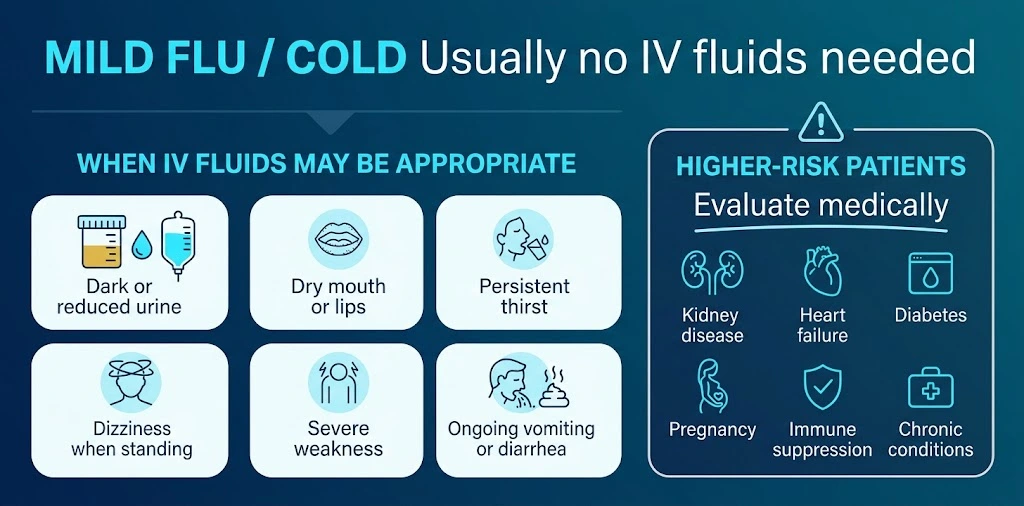
Signs of Dehydration
If you are experiencing any of the following:
- Dark, small amounts of urine or urine that is very dark
- Dry mouth, lips and tongue
- Significant, persistent thirst
- Dizziness, especially when standing up
- Weakness or lassitude that is extreme for the animal’s age and breed
- Sunken eyes or skin that “tents” when pinched together
If you are still vomiting or have diarrhea, every one of these things happens quicker—the more water and electrolytes you lose, the more you don’t get back by drinking. That’s the best recipe for an infusion.
Higher Risk Patients
There are certain groups who should only be evaluated by their doctor and not by the patient themselves, such as those with kidney disease and heart failure who are at risk for excessive fluid retention and those who have diabetes, immune suppression, pregnancy and many other chronic illnesses. These groups should not be encouraged to dehydrate when they are sick. It should be a medical problem and not a wellness one.
What Actually Reduces Your Risk of Getting Sick
Since no cold flu prevention IV actually prevents infection, it is worth naming what does. These measures are unglamorous, cheap and considerably more effective:
- Annual flu vaccination, which lowers both your risk and the severity if you do catch it
- Hand washing with soap and water, especially before eating
- Avoiding close contact with people who are sick and staying home when you are
- Sleep, since short sleep is consistently linked to higher infection rates
- Not touching your face, which is how most respiratory viruses get in
- Correcting real nutrient deficiencies, which does support normal immune function
There is no action here that is exciting. But all of it is better than a seasonal drip.
Side Effects and Risks Worth Knowing
All procedures that involve the insertion of a catheter into a vein have the potential for risk. Generally, these are mild, but you should be aware of them before you make your booking.
Common IV Related Side Effects
- Bruising, mild soreness or tenderness at the insertion site
- Temporary discomfort or a cool sensation as fluid enters the vein
- Lightheadedness, particularly if you have eaten little
- Mild nausea or a metallic taste during the infusion
Most spontaneously settle within a few hours.
Potential IV Therapy Risks
Risks range from infection at the site or in the bloodstream to vein irritation (phlebitis), fluid overloading and electrolyte imbalance, to allergic reaction. These are virtually eliminated by using sterile technique and proper dosing.
Ingredient Specific Risks
Risk is dependent on a bag’s content. Nausea is a side effect of high-dose vitamin C. It is hazardous for people with G6PD deficiency and may increase the risk of kidney stones. Excess zinc can make a person sick and affect the absorption of copper. Flushing and a decrease in blood pressure may be caused by too rapid administration of magnesium. The ingredient list is not a formality, since it determines your actual risk profile.
Who Should Talk With a Healthcare Professional First?
If you have kidney disease, heart failure or other conditions that require fluid restrictions, major medical conditions that are being treated, have never tolerated IV therapy well or are pregnant or nursing, please consult a doctor before.
Why Choose Infinite Dripz for IV Hydration in Dallas
At Infinite Dripz, every visit starts with an honest conversation about whether an infusion is the right tool for what you are dealing with. All services are performed by trained registered nurses, with a good faith exam completed by telemedicine before your first treatment.
- Vitamin IV drips in six formulations, each delivered in a full liter of fluid so hydration is genuinely part of the treatment
- Vitamin injections including B12 and vitamin D when you want something quicker
The clinic sits at 6050 N Central Expy, Suite 100, easy to reach from Uptown, Knox Henderson, Lakewood and Highland Park. Book online with questions about whether hydration support fits your situation.
Conclusion
A cold flu prevention IV is a hydration and nutrient focused infusion despite the name and the prevention framing is marketing rather than medicine. These treatments merit their use when a child has symptoms of dehydration due to sickness.
An infusion will not cure a cold or influenza. There’s no antiviral action and no one formula is best IV for flu since what’s important is the level of hydration, not the formula. Most mild cases resolve with rest, oral fluids and over the counter symptom relief and for higher risk patients with influenza, prescription antivirals started early do far more than any drip.
Vaccination, hand washing and adequate sleep remain the measures that actually reduce your risk. A cold flu prevention IV also carries real side effects and should only be given by qualified professionals who review your history first. If you or your child experience difficulty breathing, chest pain, confusion or the symptoms worsen suddenly, don’t skip the doctor’s visit, it’s not a wellness treatment.